Routine Maintenance
- Spill Buckets: Check daily for liquid or debris and ensure caps are tightly secured.
- Tank Pad Lids: Confirm lids are always properly closed and secure to prevent water intrusion.
- Water Lines & Faucets: When turning water lines back on after winter, inspect for leaks or breaks to avoid potential damage and excessive water bills.
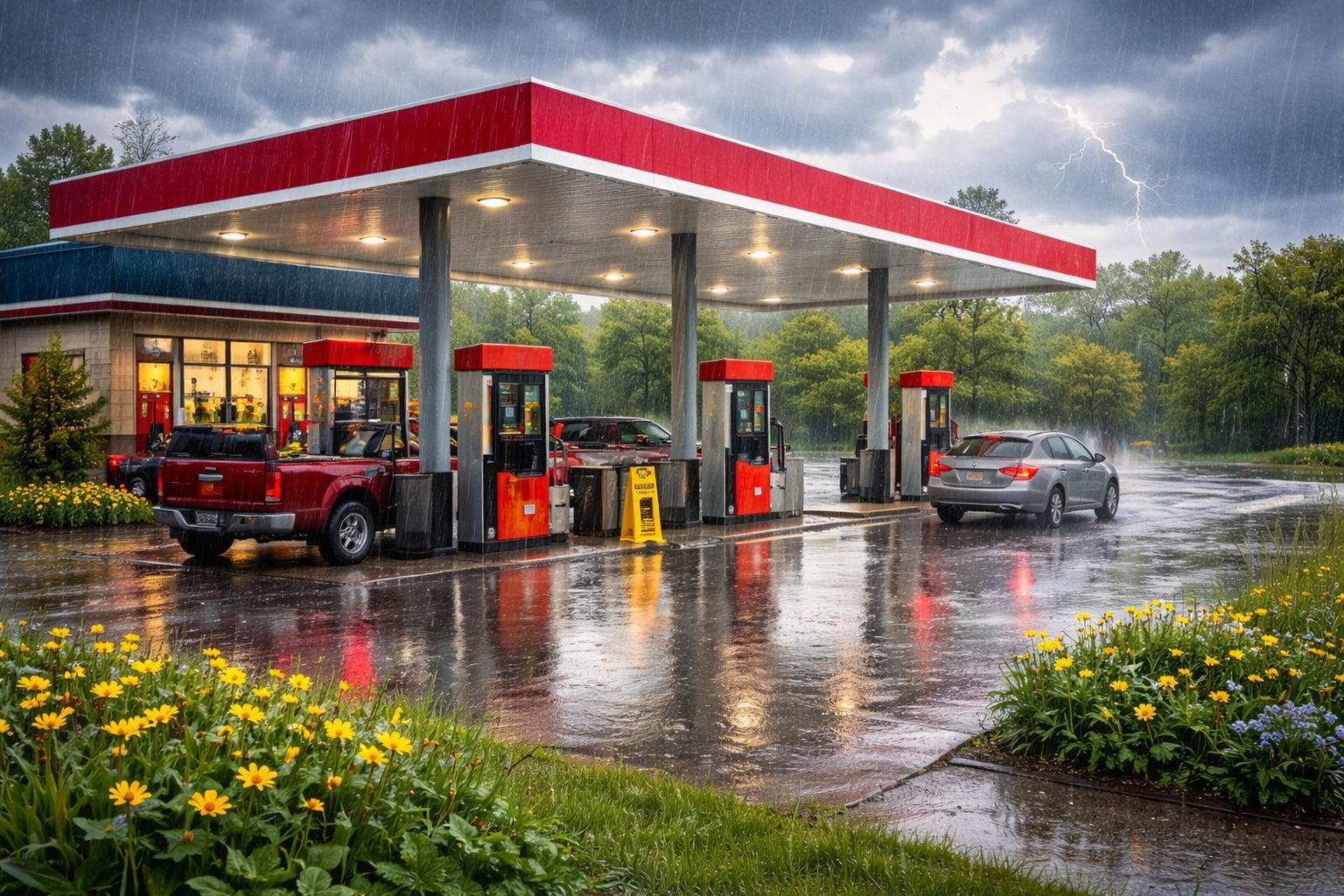
Heavy Rain & Flood Preparedness
- Fuel Monitoring: During periods of heavy rain or flooding, regularly check your tank monitoring system for signs of water intrusion. If water levels increase, print tank readings hourly to track changes.
- Rising Water Levels: If water levels continue to rise:
- Recheck tank pads and lids and drain spill buckets and STPs.
- Shut down any affected tank.
- Contact your preferred tank technician to investigate the source.
- Notify your Parent Petroleum representative and fuel hauler to prevent deliveries into the affected tank.
- Fuel Deliveries: Plan ahead during severe weather. Road closures and difficult driving conditions may delay deliveries, so allow additional time when scheduling fuel orders.
Equipment Considerations
- Water Detecting Filters: Filters can help limit the spread of contaminated fuel and provide early warning when water is present. While they won’t fully stop contamination, they can significantly reduce risk to customers and equipment.
- Recommended options: PetroClear and Cim-Tek
- Submersible Pumps: When replacing pumps, consider models that can automatically shut down if phase separation is detected.