Winter Station Maintenance: Best Practices to Keep Fuel Flowing When Temperatures Drop
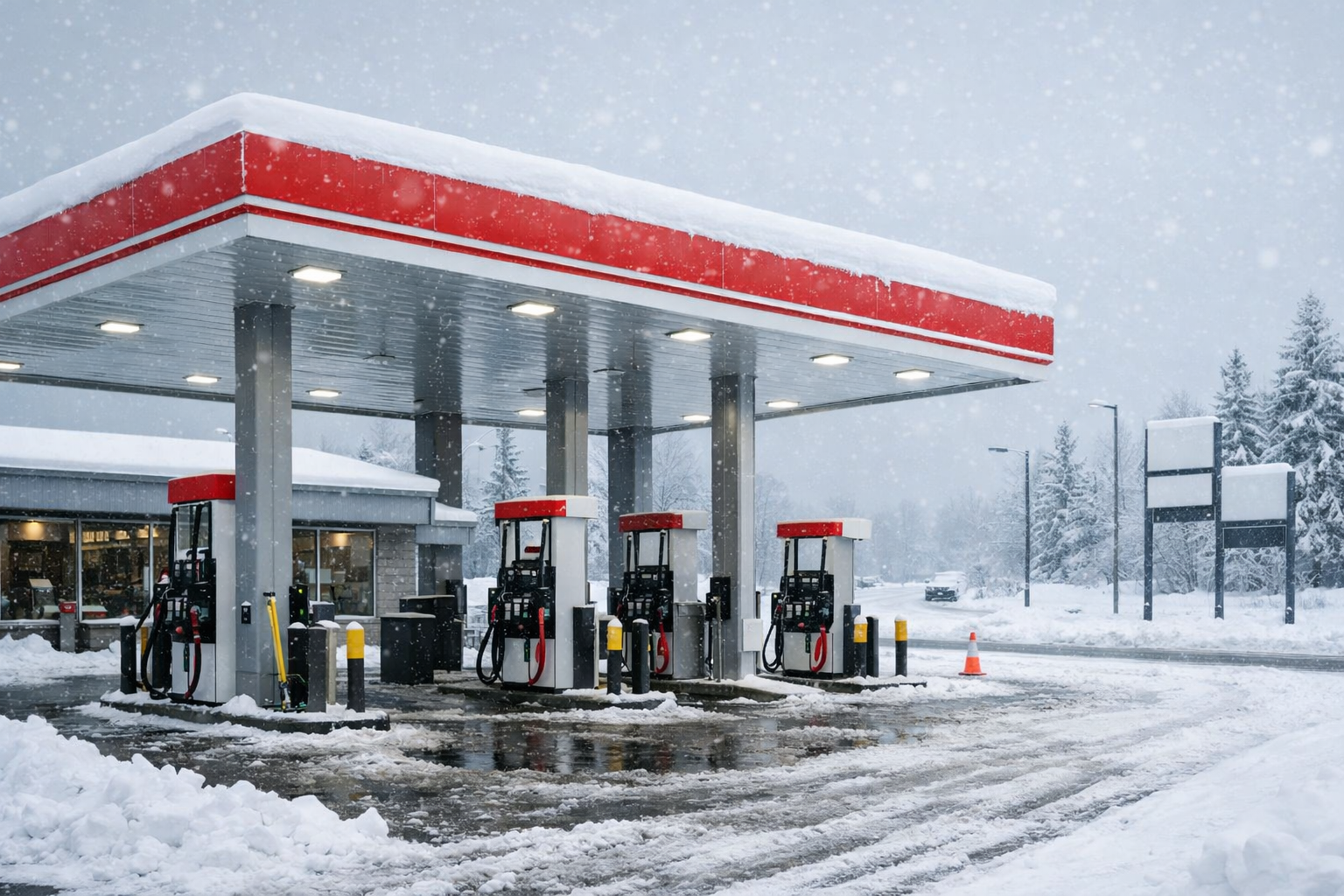
Winter weather can be unforgiving- especially for fuel stations and convenience stores. Snow, ice, and extreme cold don’t just create challenges for customers; they can directly impact fuel deliveries, equipment functionality, and overall site safety. Taking a few proactive steps now can help prevent costly disruptions and keep your operation running smoothly throughout the season.
Here are several winter station maintenance best practices every site operator should prioritize as temperatures fall.
Keep Spill Buckets Clean and Dry
Spill buckets are particularly vulnerable during freezing conditions. When water accumulates inside them, it can freeze solid, causing lids or snap caps to become stuck. If a hauler is unable to open the bucket, fuel delivery may be delayed—or impossible.
Regularly checking that spill buckets are clean and completely dry can help avoid delivery interruptions. It’s also important to note that if a delivery attempt is unsuccessful due to frozen lids or caps, the site may be responsible for additional trip charges and left without product.
Secure Tank Pad Lids
Tank pad lids should always be properly positioned and tightly secured. This simple step helps prevent water intrusion into tanks and spill buckets, reducing the risk of freezing and equipment damage during cold snaps.
Protect Tank Pads During Snow Removal
During heavy snowfall, snowplow operators often have limited visibility of tank pads and lids. This can lead to plows unintentionally striking or removing lids—damage that can be expensive to repair.
A simple preventative measure is to place safety cones over all tank pad lids when snow is in the forecast. This makes their locations clearly visible and helps protect critical infrastructure during plowing operations.
Remove Snow by Hand When Necessary
While plowing is essential for lot safety, tank pads and lids should be cleared manually using a shovel. Heavy snow buildup can prevent haulers from accessing tanks, delaying deliveries. Hand-clearing these areas helps ensure safe access while avoiding accidental damage from plows.
Avoid Using Rock Salt in Spill Buckets
Although rock salt is effective for melting ice, it can cause long-term damage when used improperly. Rock salt can degrade spill buckets and containment linings, leading to premature wear and costly repairs. To prevent this, never place rock salt inside spill buckets or dispenser containments.
Insulate C-Store Water Lines and Pipes
Cold weather can also impact convenience store operations. Any water lines or pipes located along exterior walls should be properly insulated, or the room should be equipped with a heater. This reduces the risk of frozen pipes and potential water damage inside the store.
During periods of extreme cold, allowing a slow, steady stream of hot water to run can provide additional protection against freezing.
Winter preparedness is about prevention. Small, proactive maintenance steps can help avoid delivery disruptions, equipment damage, and unexpected expenses—while keeping your site safe and operational all season long.
If you have questions about winter station maintenance or need additional guidance, please contact our team at fueloperations@parenetpetroleum.com. We’re here to help you stay prepared, no matter what the weather brings.